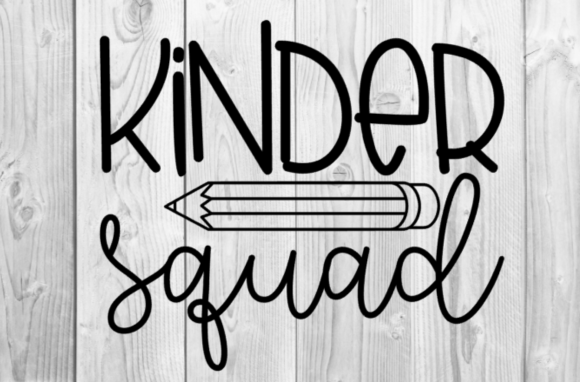
Kinder Squad: A Practical Designer's Review for Real Projects
When an embroidery file lands in my library, I don't just look at the preview. I think about how it will live after stitching—on a sweatshirt, in a boutique window, or wrapped as a gift. Today, I'm looking at the Kinder Squad design, a straightforward text-based piece aimed at team spirit. My assessment is based purely on how I'd use it in a real client project or for my own small shop merchandise.
First Impression: Uncomplicated and Versatile Mood
The Kinder Squad design, as a pure graphic, has a cheerful, inclusive feel. Its personality is built on simplicity. There's no intricate illustration to manage, which immediately tells me this is a workhorse design. Its strength is its blank canvas nature; you can make it yours with thread color choices. For an embroidery designer, this means the mood isn't locked in by the file itself, but by your application. On a bright yellow sweatshirt with navy thread, it feels sporty and fresh. On a pastel baby onesie with soft pink thread, it leans sweet and playful. This versatility is its first major asset.
Where This Design Finds Its Home: Project Fit
This isn't a design I'd hoard for one niche. Its "kinder squad" theme naturally aligns with custom apparel for groups, but its use cases sprawl much further. I'm picturing it on unisex tote bags for a teacher's gift, subtly embroidered on a pillow cover for a kindergarten classroom reading corner, or as a small accent on a tea towel in a family kitchen. For craft business owners, especially those selling on Etsy or at fairs, it's a perfect candidate for personalized products—think a child's name added alongside the design on a baby blanket or a holiday gift apron for a preschool aide.
Because it's text-based without tiny serifs or extreme detail, it also handles curved surfaces better than many designs. I'd confidently test it on a cap or beanie for a coach, assuming the hoop size is appropriate. The real-life scenario I'm envisioning is a last-minute request for a small batch of matching embroidered patches for a kindergarten volunteer squad. This design would stitch out cleanly and quickly, allowing me to deliver a professional, cohesive look without spending hours on complex edits.
Caution Zones: Where to Proceed Carefully
Even a simple design has its considerations. The primary watchpoint for Kinder Squad is the lettering density. A phrase like this, when stitched, creates a contiguous block of satin stitch or fill stitch. On thin or stretchy fabric like a lightweight t-shirt, a dense block can cause puckering or make the fabric feel stiff. On dark fabric, the contrast needs to be planned—a very light thread color on black cotton may require a different stabilizer strategy to keep the stitches crisp and prevent shadowing.
I would avoid using it on very small hoop sizes where the text becomes minute. Small, dense lettering can lose clarity and become a fuzzy read. Also, on highly textured fabrics like boucle sweaters or terry cloth, the clean lines of the text might get lost in the fabric's landscape. For products that need frequent washing, like kitchen towels or kids' apparel, ensuring the stitch density isn't so high that it wears aggressively on the fabric is key. Always, always test on scrap fabric first.
Impact on Your Business and Client Trust
From a commercial perspective, using a clean, legible design like this correctly builds immediate customer trust. A neatly embroidered Kinder Squad on a sweatshirt embroidery project shows attention to detail. There are no awkward overlaps or confusing elements to explain. This boosts the perceived value of your handmade product or custom apparel service.
For digital product sellers offering this as an embroidery file, its simplicity is a selling point. It's easy for other makers to visualize on a printable mockup, and it doesn't require advanced machine skills to stitch well. This increases its appeal as a design asset for a wide audience of hobbyists and entrepreneurs. Its brand consistency potential is high for a small shop focusing on teacher, parent, or child-centric themes—every product with this design feels part of a collection.
The Designer's Practical Checklist Before Hooping
Before I run this for any real project, my mental checklist is short but critical. First, I decide on my thread colors based on the background fabric. I might even test it in black and white mockups to see how it reads purely on form. I confirm the physical hoop size I'll use and ensure the design dimensions are appropriate—nothing worse than a design feeling cramped or floating oddly on a bag.
I inspect the digital file for any minuscule details in the letters that might not translate well to stitch, like very sharp inner corners. I plan my stabilizer type based on the fabric texture. Crucially, I verify the licensing terms for this machine embroidery design. If I'm stitching commercial embroidery projects for a local school or selling finished tote bags in my shop, I need to know the rules. Can I sell the physical finished product? Can I use it in craft business items freely? I never assume; I check.
Final Real-World Judgment
The Kinder Squad design, in the category of T-Shirt Designs and Graphics, is a practical, friendly tool. It won't win awards for complexity, but it will reliably help you create cohesive, cheerful projects. It's a design that says, "We're a team," without shouting. In my studio, it would be filed under "Versatile Text-Based Designs" for group orders, quick gifts, and additive personalization. Its value is in its straightforward execution and the ease with which it can be integrated into a larger product story. For the maker looking for a design that stitches cleanly, adapts to color schemes, and resonates in community-focused niches, this is a solid, dependable choice. Just remember to treat it with the same preparation as any design: test, plan, and stitch with confidence.